Your Custom Text Here
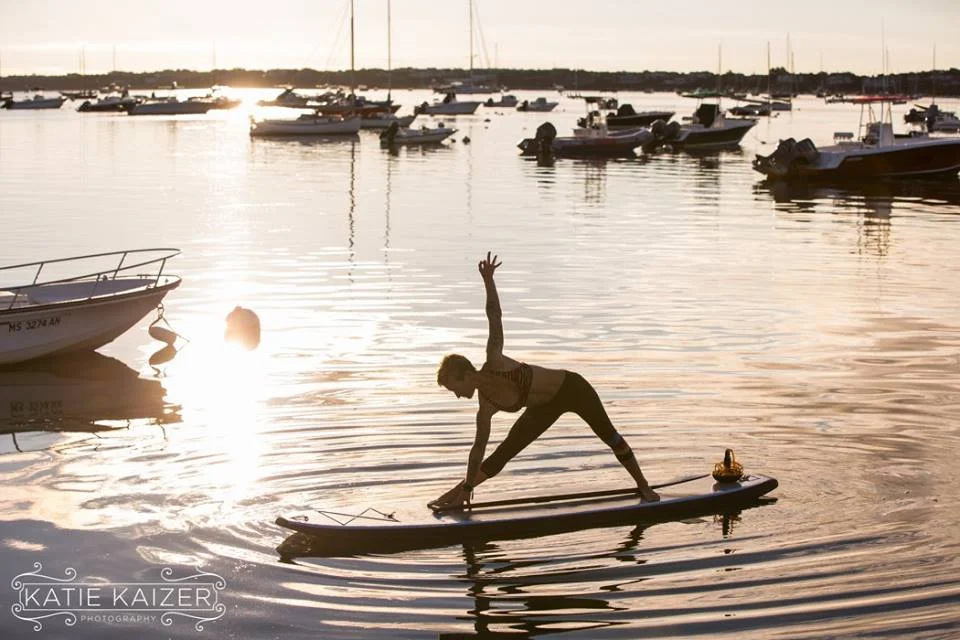
Triangulating the Intention of Trikonasana
Trikonasana aka Triangle Pose, is a beautiful yoga asana, or posture, that both stretches and strengthens the entire body. While no single yoga pose is a substitute for a full practice, if you’re limited on time and looking for one posture that will set you up for having great day, trikonasana might just be your jam.
All that being said, triangle pose is more than just a shape, it’s a beautiful metaphor. Within the embodied shape is an opportunity to ground into the present moment (think through the legs), fire up our desires and goals (manifested through the core) and a chance to spread our wings (aka arms) and express ourselves.
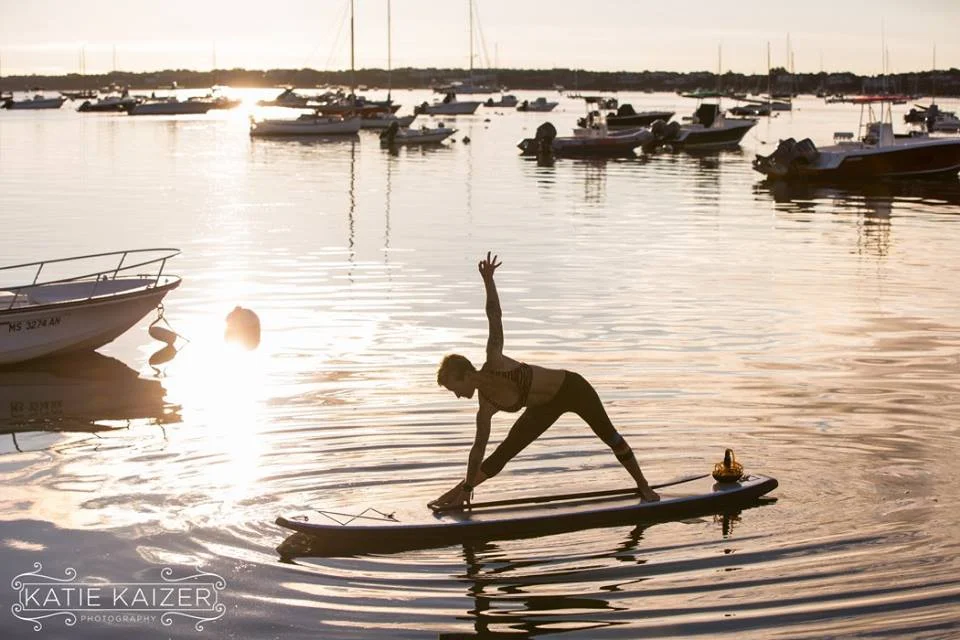
I remember very clearly, the first time I felt appreciative of this deceivingly simply looking yoga pose. I was practicing in a tiny studio, next to a boy I liked, on a little island 30 miles out to sea. Trikonasana was his favorite pose and I remember, while watching him articulate the reach of his top arm by brining his thumb and pointed finger into gyan mudra (think of the OK symbol), that he looked exquisitely good doing it.
Of course this was not the first time I had practiced triangle pose; I had been adjusted in this asana by Alan Finger in New York City, instructed in it’s alignment by Ganga White in Santa Barbara and urged to embody it’s energetic flow at Kripalu by Shiva Rea. Yet it wasn’t the sage wisdom of any of these formidable teachers that pulled the shape together for me, it was love.
As most Western practitioners know by now (regardless of whether or not they actually believe it) yoga isn’t just a physical discipline. It’s SOMAtic, as in a practice that integrates the body and mind. Symbolic, as in expressive of the emotional exploration and the creative process of the self learning about the self. And in the case of the Prana Vinyasa yogi, deeply devotional.
In my lineage, it is important that one’s physical practice of yoga has bhavana, loosely translated to mean the cultivation of a quality or feeling. I think of it as heart. Well I didn’t yet have the language to understand bhavana back in my early 30s, but as a dancer I did understand the art of self-expression. I knew what it felt like to use my body to tell a story, share a sensation, or curate a collection of complicated emotions.
In that moment, watching my beautiful friend embody whatever trikonasan meant to him, I was inspired to do the same. I lined it up like he did, and just for fun added the mudra to my own extended top hand. A flourish of passion rose from my roots all the way up to my crown, and instantaneously triangulating through my body were feelings of new love, compassion for all the lovers out there and an accompanying sense of dare I say it, divine bliss.
Horse shit you say? Maybe. Certainly my 20-year old self would agree. But I’m in my 40s now, and I’m not afraid to say things I feel anymore.
Listen, I’m not trying to sell you on the idea that I have, or you should experience ecstasy in every yoga class, let alone every yoga pose. But I will go on the record to say I truly believe that if you bring heart into your asana, you will taste the mystic now and then. That’s what these shapes are designed to do - align you with the bliss that while sometimes asleep, is already deep within you. All you have to do is stay clear about the bhav you bring into your practice.
So let’s get into the nuts and bolts of this alignment stuff:
Trikonasana aka triangle, stretches and strengthens the entire body. While no single yoga pose is a substitute for a full practice, if you’re limited on time and looking for one posture that will set you up for having great day, trikonasana might just be your jam. Benefits of triangle pose include toning the calves, quads and core and lengthening the hamstrings, groins and spine. This pose has been said to help relieve sciatica, back pain and the symptoms of menopause while also reducing stress and anxiety. Trikonasana can improve digestion and is therapeutically indicated for those suffering from flat feet and osteoporosis.
All that being said, triangle pose is more than just a shape, it’s a beautiful metaphor. Within the embodied shape is an opportunity to ground into the present moment (think through the legs), fire up our desires and goals (manifested through the core) and a chance to spread our wings (aka arms) and express ourselves.
To experience this multi-faceted pose for yourself follow these 10 steps to total trikonasana triumph:
Start standing in tadasana (mountain pose); feet together at the top of your mat.
On an exhale, take a big step back with your left foot, so that your legs span 75-85% of your mat’s length (beginners or those students who tend towards tight hamstrings, stay a little short of 75%).
Keep your right toes facing forward, turn your left toes slightly in towards the midline or keep the left foot parallel to the back edge of your mat (beginner’s can brace the left foot against a wall for additional support). Your front heel should be aligned with the instep of your back foot, or if your hips feel impinged, widen your stance a few inches.
Inhale. Draw energy up through the legs, firming the quadriceps, so that both kneecaps lift and extend both arms out parallel to the ground.
This is key: before you alter the alignment of your hips, shift your pelvis towards your back foot (think about middle school girls when they stand chatting at their lockers, weight resting more on one foot, hip pushing to the weighted side). Now on an exhale, reach the front arm as far towards your front foot as possible, creating a big stretch in the left side waist, and keeping yourself anchored through your foundation, especially the outside edge or your left heel.
Still exhaling reach your arms along this horizontal pathway, simultaneously lengthen your torso, keeping both sides long, over your right leg. Your right ribs should be gazing at the earth, your left ribs facing the sky.
On an inhale, take the arms from parallel to the grown to perpendicular, so you can reach your right hand to your shin, a block placed just inside your right arch, or if possible the floor, inside the right leg, near the instep. Reach your left arm up to the sky, so that the left hand is aligned over your heart and due north of your right hand. Think of your arms as a vertical pillar of channeled energy, like a lightening rod that runs through your heart center).
Energetically send your tailbone towards your left heel, while extending your crown towards the front of the room.
Your gaze can be directed down towards the floor, straight ahead at the left wall of your space, or you can sweep your chin across your chest to look up at your left hand), just be sure to keep your neck long and your shoulders far away from your ears.
Now, to activate all the power of trikonasana simultaneously press your feet into the earth and away from each other while also isometrically (without moving) draw them in towards one another. Pulling all that powerful energy up from the ground through your legs, in and up through the core, radiate it out through bother arms and forwards through the crown of your head. Inhale from the crown down to your pelvic floor and then exhaling visualize the breath rising up from the pelvic floor to the crown of your head. Slow your breath down as much as possible for 3-5 cycles, drinking your breath as if sipping on sweet nectar through a bamboo straw.
(( On an inhale rise back up to a vertical spin position, soften the knees and step the feet together. Repeat the journey on the second side, stepping back with your right foot.))
Modifications: for more support, beginners can do this pose with their backs against a wall, setting a block for the bottom hand, on its tallest edge, a little closer to the pelvis (as in to the rear of, not next to the instep of the front foot). Students with cervical issues should keep the gaze down at the floor or neutral.
Variations: Students with significant hamstring flexibility and core strength, for whom it is easy to keep everything in proper alignment and have their bottom hand on the floor, may enjoy taking the bottom hand to the outside of the leg. Play with taking the top arm behind the back, resting the palm of the hand on top of the bottom thigh for a half bind. Another advanced variation, which challenges the core even more involves reaching both arms towards the front of the mat, framing the face with the palms facing on another as an extension of the line of energy from tailbone to crown.
As you would after any yoga practice, please lie back in savasana (corpse pose) for a moment of relaxation before moving on with your day. Reflect on how the posture has made you feel; what is going on in your physical body and where is your attention resting? Honor the process of receiving this valuable information from your body. What was your somatic experience like? Did you feel the heart of the pose?
THE DAILY MEDITATION
Let’s be honest. Yoga, like life, is a practice, and I am far from practicing either perfectly. I’ll be the first to admit that I have ridiculously high expectations for myself, and I’m really good at beating myself up when I fall short. I want to be able to do things, most things, (okay, everything) well, if not specatularly well. And when I don’t, which I won’t, because I can’t, I get frustrated and discouraged. And believe me, I know that as a yoga teacher this isn’t exactly politically correct to admit. I’m not supposed to be goal-oriented or ego-driven. In fact, I’m supposed to be non-judgmental, patient and compassionate with everyone, including myself. I’m accepting and understanding of everything, and I embrace all sentient living creatures with equal amounts of love. But let’s be real for a moment? It’s just not that easy.
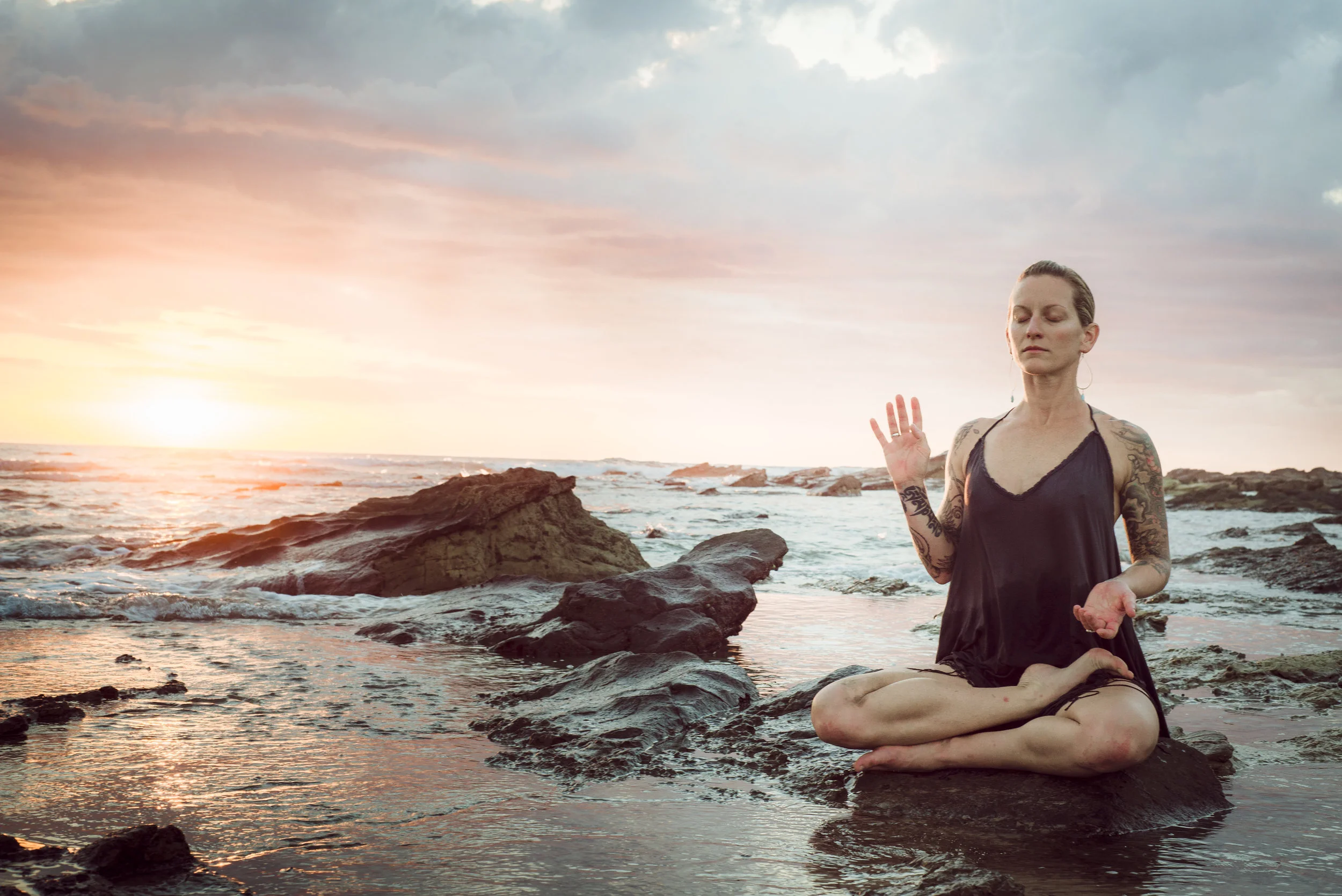
photo by Katie Kaizer
Let’s be honest. Yoga, like life, is a practice, and I am far from practicing either perfectly. I’ll be the first to admit that I have ridiculously high expectations for myself, and I’m really good at beating myself up when I fall short. I want to be able to do things, most things, (okay, everything) well, if not specatularly well. And when I don’t, which I won’t, because I can’t, I get frustrated and discouraged. And believe me, I know that as a yoga teacher this isn’t exactly politically correct to admit. I’m not supposed to be goal-oriented or ego-driven. In fact, I’m supposed to be non-judgmental, patient and compassionate with everyone, including myself. I’m accepting and understanding of everything, and I embrace all sentient living creatures with equal amounts of love. But let’s be real for a moment? It’s just not that easy.
As yogis and yoginis we hope to practice the yamas (non-violence, truthfulness, non-stealing, moderation and non-hoarding) and live a life full of mindfulness, and compassion. It is a noble aspiration be as mindful of our first breath as our the last, and all the breaths we take in between. For most of us, there will be breaths that will stack up as hugely alert (focused pranayam, the first breath drawn after a 90 second hold beneath the waves, an exhale which crowns a baby’s head, a gasp taken in horror or ecstasy, or the last sigh before the soul leaves the body). Others, here and there, are simply stolen from the atmosphere on autopilot, our attention diverted to the many other things swirling around in our minds. When we practice mindfullness we try to be aware of as many breaths as possible.
Whether it’s adhering to a schedule of daily asana and/or meditation, taking my 2 year-old to the beach, or finding time to fold and put away 3 loads of laundry, one of the things that gets in my way is my desire to do it all. Things, sometimes many, fall by the wayside-because that’s what happens with life, and I often feel disappointed I when I don’t accomplish more. I feel bad when I don’t make time to study, and worse when I haven’t had an opportunity to reflect on my spiritual path. And I think that because I am a yoga teacher, there are times I feel an additional pressure, to navigate through my life with fundamentalist’s fever. I either berate myself when my mindfulness slips and slides: when I say something judgmental about someone, get angry at my partner, feel enraged when someone hurts my feelings, or yell at my child. Real yoga teachers don’t loose their patience with their off-spring, do they? Well, yes – actually… they do. I’ve asked around. We do. And I’m going to be honest with you: I do too.
If I don’t punish myself for being a “better yogi”, I might find myself pushing back against the practice with a rebelliousness that harkens to my angry, jaded and nihilistic 20’s: So I passed a judgment, I might say to myself, so what…everybody else does. I lost my temper; um, well he did yesterday…and so on. But this response is childish, and no less toxic that the aforementioned self-flagellation. So I remind myself, as I’m doing here, in print, that letting up on myself is the better option, and every day presents us with yet another opportunity to recommit to the path of mindfulness.
The truth is, I make mistakes. We all do. And maybe you haven’t, but I’m going to venture a guess that you’ve probably lied at some point, such as I have. I’ve stolen. I’ve acted out of jealousy, and anger. I’ve been competitive in my asana practice and envious of other teachers and students. I am extremely insecure from time to time, and especially depending on where I am in my cycle I can be emotionally unpredictable and even volatile. I don’t floss my teeth every night, and I haven’t used a neti in months. I once lost my patience with my late husband, who was dying of cancer, and asked me for a glass of water at the end of a very trying day. I yelled at him. He was dying. Did I mention he was dying? He forgave me, because he hadn’t an ounce of anger, resentment or judgement left in his body those last few weeks, he was already moving into a more enlightened state of consciousness. I didn’t forgive myself for years.
I got there, eventually, because I finally accepted that I couldn’t carry that kind of pain around with me and be the kind of person I want to be. I knew that at the time, (27 and on the brink of losing someone I was very much in love with) I did the very best I was capable of. There are other things I haven’t accepted yet, and travesties I haven’t forgiven yet but maybe, with time, and practice, I’ll get there too.
I might not, at this point in my life, be able to take a month-long retreat to India, or Bali, or some other exotic spiritual destination, nor can I bow out of my parenting responsibilities and instead bow to the feet of a guru, or keep my every thought focused on devotional intentions – and actually, if I’m honest – I don’t want to. But I can work here, within the context of my pretty awesome life, and practice meaningfully within the scope of my relationships. I can be a yoga teacher, and a yoga student. A mother and a lover.Shiva and Shakti. I can practice patients with my son. I can practice thoughtfulness with my partner. And I can practice engaging with the people in and around me with compassion and love. My practice will not be perfect. But I am committed to being the best possible me I can possibly be.
My partner recently told me that he wasn’t interested in being in a relationship with someone content to settle for less. It’s a good thing I’m not either.
THE ARTFUL SANKALPA
Sankalpas are intentions, similar to resolutions, and yet quite different. Sankalpas are often positive things we wish to cultivate – like peace, compassion, love, or truthfulness. Resolutions, on the other hand, are often about decreasing something, giving an indulgence up like alcohol, fatty foods, sugar, or TV… sometimes a list of New Years resolutions can feel like punishment, or self-denial.
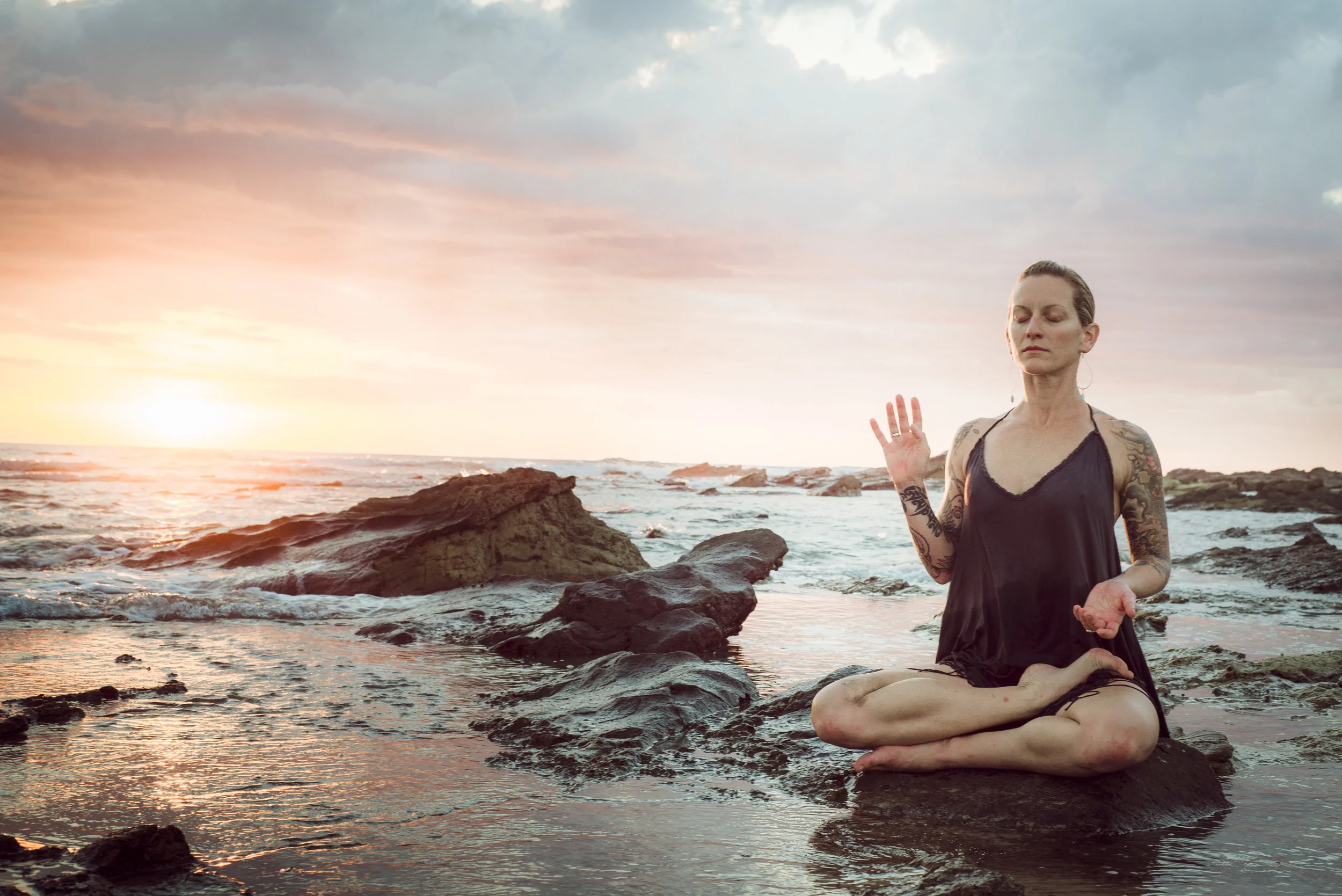
photo by Graham Swindell
Thursday night I had the opportunity to practice at the studio, not something I get to do often late in the week, so it was a real treat. Especially because It seems like ever since I completed the 60 Day Yoga Challenge back on the 10th of December, my asana practice has kind of fallen off the mat, and it’s amazing to me how having external motivators in place, like a challenge, can totally change the way we, or I as it were, approach self-discipline. Anyway, I was super psyched when I arrived at the Yoga Room to see that Susan had written the word Sankalpa on the dry-erase board, which is the Sanskrit word for will, purpose or determination, how perfect.
Sankalpas are intentions, similar to resolutions, and yet quite different. Sankalpas are often positive things we wish to cultivate – like peace, compassion, love, or truthfulness. Resolutions, on the other hand, are often about decreasing something, giving an indulgence up like alcohol, fatty foods, sugar, or TV… sometimes a list of New Years resolutions can feel like punishment, or self-denial.
So in this way, a sankalpa is actually the opposite of a resolution. It’s about increasing not decreasing. And the process of creating more space for our intentions to grow, instead of the often difficult task of giving something up. Sankulpas foster positive self-image, whereas resolutions can run the risk of making you feel like you’ve been perpetually coming up short.
Here we are on the cusp of yet another new beginning. And whether you believe this is the dawn of just another new day – which in itself is still a miracle, or if you celebrate New Year’s Eve as the end of one year, and beginning of a new chapter in your life, it is without a doubt a time when many people take a moment to reflect on the past and look towards the future with fresh eyes. The end of the December presents us with a chance to re-evaluate where we are in our lives, our relationships, our careers and of course, our practice. So if writing down a list of resolutions is not your cup of tea, perhaps thinking about the sankalapas you wish to cultivate in the year to come will get you closer to a place of greater equanimity.`
Anyway, however deep your intentions are, or long your list or resolutions may be, I wish you many powerful and compassionate sankalaps in the year 2012. May your New Years Eve celebrations allow you a moment to be grateful for all that you have, and all the beautiful things to come.
I celebrated earlier this evening, as Griffin, Burr and I watched a Fantasia-esuqe sunset over Cisco beach on the Western side of Nantucket. The moment flooded my heart with love and gratitude as I watched my two most special people smile at the simplicity of the setting sun. Griffin excitedly pointed to the great ball of fire in the sky exclaiming “hot” over and over again, while a big bright rainbow spanned the horizon behind us. It was the perfect ending to a transformative year.
Many thanks to all my friends, family, students, teachers and mentors for all there continued support. To my son, for giving me a reason so much bigger than myself to continue down the path of Self-realiztion. And to my partner, for nurturing me along the way.
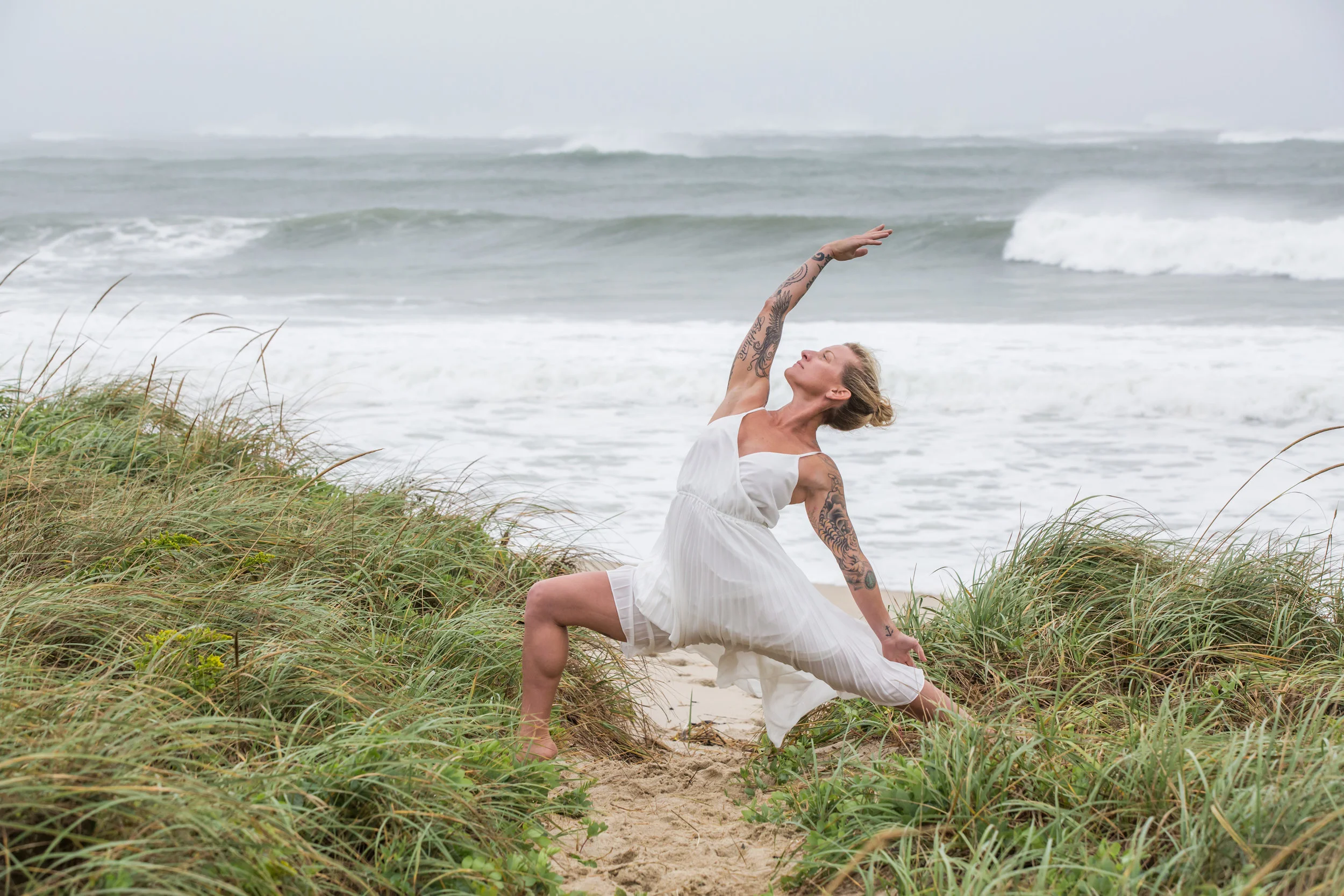
Body Attachment
This might seem like an obvious statement (most of us are pretty attached), but it’s actually something I’ve been working to let go of for a long, long time. Not my body, the attachment that is. My body comes in real handy when I have to lift the baby from his crib, go to the grocery store, or demonstrate a posture in class. All sorts of spiritual gurus and leaders tout the benefits of practicing non-attachment, but it’s so much harder than anything I’ve worked towards, including my undergraduate degree, passing the NCTMB, learning a solid Chataranga, or even the still-ellusive handstand.
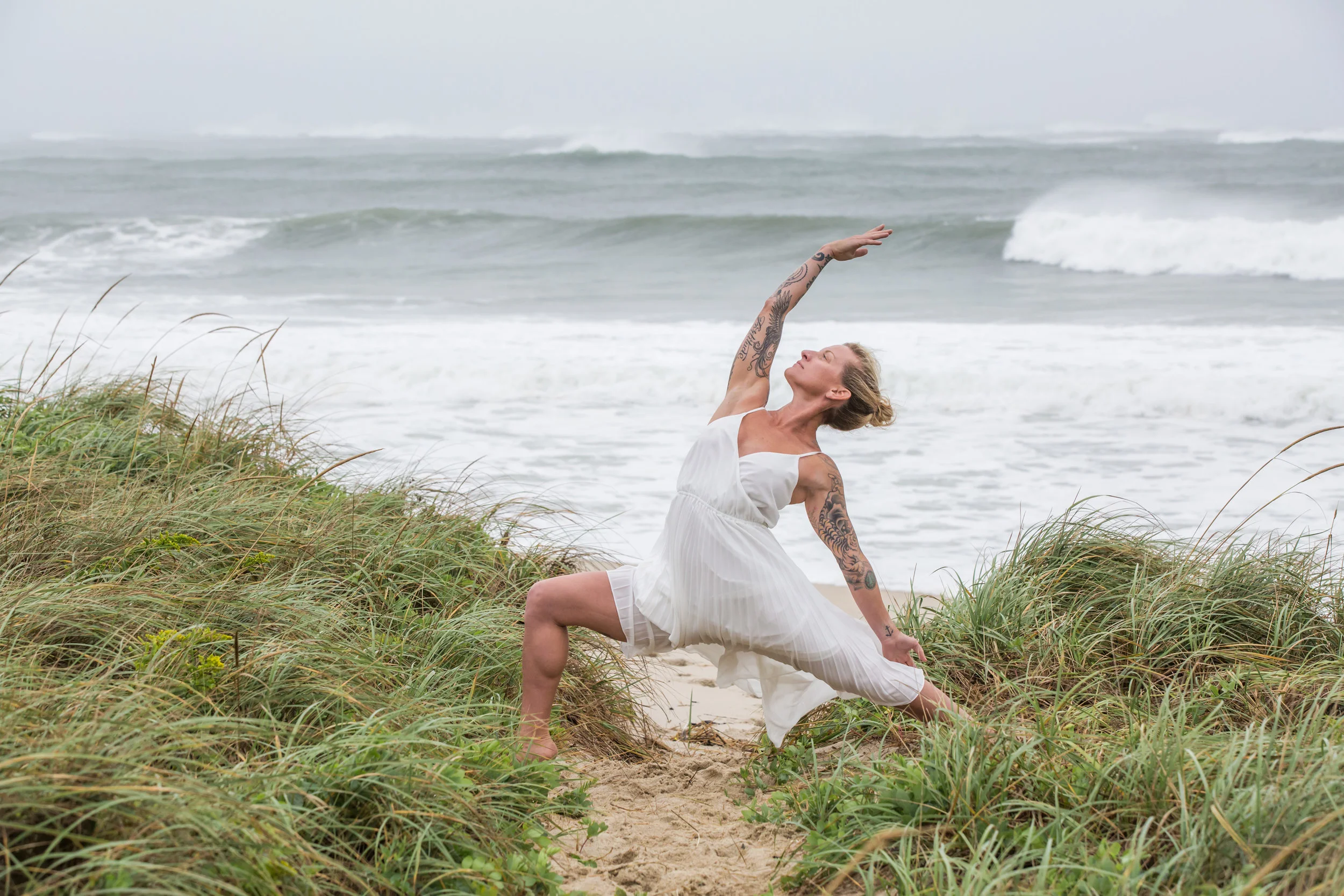
photo by Katie Kaizer
I am attached to my body.
This might seem like an obvious statement (most of us are pretty attached), but it’s actually something I’ve been working to let go of for a long, long time. Not my body, the attachment that is. My body comes in real handy when I have to lift the baby from his crib, go to the grocery store, or demonstrate a posture in class. All sorts of spiritual gurus and leaders tout the benefits of practicing non-attachment, but it’s so much harder than anything I’ve worked towards, including my undergraduate degree, passing the NCTMB, learning a solid Chataranga, or even the still-ellusive handstand.
Non-attachment is a real bitch.
So anyway, several years into this process, I’m still pretty attached to my body, and lately it’s been grossly self-evident. Last week I started off my Tuesday with my first ever mammography. Then on Wednesday I had an MRI of my left knee done (the same knee with the injury that ended my dance career in 2000), followed by a CT of my left ankle, which I have now broken twice in the same spot, once in 1989 and again when pregnant with my son in August of 2009. Needless to say I was feeling tremendously attached to the outcome of all these diagnostic procedures, and began to experience intense empathy for my body’s soft tissue.
At some point by Thursday I was in the full throws of what-if’s. What if I can’t do massage work this summer? What if I can’t teach yoga? What if I can’t practice myself? What if I have a malignant breast tumor ? What if, what if, what if…
I began to get upset. I worked myself into a emotional tizzy. My knee began to hurt, my ankle started to swell, and in my agitated limbic state, the area of discomfort on my right breast started to grow. All in a matter of moments. Fuck, I thought. I’m so super attached to my body! This expletive was quickly followed by another in the form of: Shit! I’m trying not to swear!
Hang on, let’s just pause for a moment. I would like to state for the record that in the last year I have given up all meat and seafood, alcohol, and most dairy products. Despite having a partner who would like it better if we both gave up stimulants and bad language… I must continue to swear while eating chocolate and drinking coffee just to keep myself interesting to other people.
Anyway, I started to think about my physical self, my physical life, work and play, and what it would be like to loose temporarily or permantely my athletic ways of navigating through the world. Sadness and panic rushed into my chest. Everything got tighter, and I began to feel a little wheezy. This was an absolutely amazing moment.
I realized that however I might deny it to myself or others, I am profoundly caught up in my yoga body, which is really just a newer, more insidious version of my old dancer body- and all its issues. As it turns out, my sense of self is directly tied into what I can do with my body, and my body has literally grown into who I am and how I support myself and my family. Some of this is simply fact: as in, I need my hands, fingers and elbows to do good deep tissue work. But some of this is really old shit I need to let go of: like, I must not be a good yogi if I can’t do adho mukha vrkasana.
So, time to check that attachment thing again, and recommit to thinking outside the musculoskeletal box! After all there are plenty of yoga poses you can do with one good knee, or ankle, or boob.
And just when I think I’ve gone beyond the need for a perfect Chatarunga, I catch myself thinking, well my Bird of Paradise has gotten really good lately! And off it goes- my mind and it’s monkey.
Ah well, one un-attached foot in front of the other. One day at at time.